



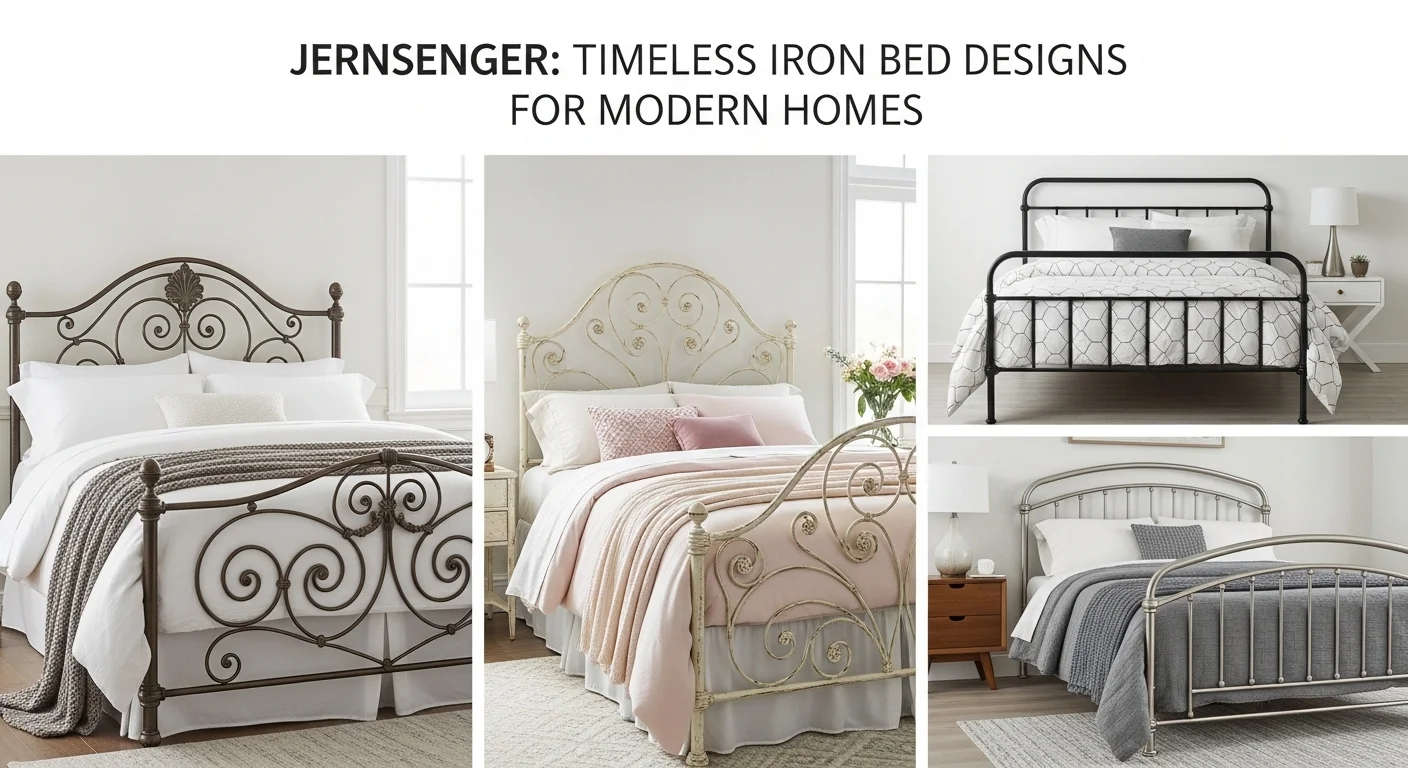
In an era where innovation is measured in lines of code and speed to market, it might seem surprising that jernsenger—iron beds—are gaining renewed attention. Yet beneath their minimalist frames lies a powerful story about durability, craftsmanship, sustainability, and the evolution of consumer expectations. For startup founders, entrepreneurs, and tech professionals, jernsenger offer something more than aesthetic appeal. They represent a compelling case study in how traditional products can be reinvented through smart design, advanced manufacturing, and digital-first branding.
The global furniture market is shifting. Consumers no longer want disposable pieces that collapse after a few years. They want longevity, integrity, and story. Jernsenger, with their solid metal construction and timeless appeal, align perfectly with this movement. And as demand grows for sustainable, long-lasting products, iron beds are moving from vintage niche to modern essential.
The Enduring Appeal of Jernsenger
Historically, iron beds symbolized resilience. During the industrial era, metal frames replaced wooden structures because they were stronger, more hygienic, and less vulnerable to pests. Over time, ornate Victorian iron beds became design statements in European homes.
Today’s jernsenger have evolved. Clean lines, matte finishes, and modular structures appeal to contemporary buyers who prefer minimalism. Retailers such as IKEA have long recognized the commercial potential of metal bed frames, offering affordable and durable options for global markets. Meanwhile, design-forward brands position iron beds as premium lifestyle products.
The enduring appeal lies in three core factors: durability, versatility, and aesthetic neutrality. Unlike bulky upholstered frames that dominate a room, jernsenger provide structure without visual heaviness. For urban dwellers in compact apartments, that matters.
Why Jernsenger Resonate with Modern Consumers
Consumer psychology has shifted dramatically over the past decade. Sustainability is no longer optional—it is expected. Iron, as a recyclable material, aligns well with environmentally conscious values. Unlike composite wood or particleboard furniture, iron frames can last decades with minimal wear.
E-commerce has also reshaped buying behavior. Customers research, compare, and evaluate products online before purchasing. Platforms such as Amazon and Wayfair have normalized ordering large furniture items digitally. As a result, brands selling jernsenger must optimize product descriptions, imagery, and logistics for digital environments.
Moreover, remote work has transformed the home into a multifunctional space. Bedrooms double as workspaces. Consumers want furniture that feels structured and stable, psychologically reinforcing a sense of order. Iron beds, with their clean geometry, support that aesthetic.
Manufacturing Innovation in the Jernsenger Industry
While iron beds may appear traditional, the manufacturing behind modern jernsenger is anything but outdated. Advanced production technologies have streamlined fabrication, improved precision, and reduced material waste.
Computer-aided design software enables manufacturers to prototype quickly and test structural integrity before physical production. Laser cutting and robotic welding improve consistency while reducing human error. Powder coating techniques enhance durability and allow a broad palette of finishes.
The evolution of manufacturing can be summarized in the following comparison:
| Aspect | Traditional Iron Bed Production | Modern Jernsenger Manufacturing |
| Design Process | Hand-drawn patterns | CAD modeling and 3D rendering |
| Fabrication | Manual forging | Automated laser cutting |
| Assembly | Labor-intensive welding | Robotic precision welding |
| Finishing | Basic paint coatings | Durable powder coating systems |
| Distribution | Local retail stores | Global e-commerce logistics |
For tech professionals, this transformation mirrors shifts seen in hardware startups. Efficiency, scalability, and automation reduce costs while improving product consistency.
Branding Jernsenger in a Digital-First World
Building a successful jernsenger brand today requires more than strong metal frames. It requires compelling storytelling. Consumers want to understand material sourcing, craftsmanship standards, and sustainability commitments.
Social platforms like Instagram have become essential marketing channels for furniture brands. A carefully styled bedroom featuring an iron bed can communicate elegance, strength, and simplicity in a single image. Video content on YouTube further enhances trust by showcasing durability tests and behind-the-scenes manufacturing.
For entrepreneurs, this demonstrates the importance of merging product development with brand narrative from the outset. A strong story transforms a functional object into a lifestyle choice.
Jernsenger and the Startup Playbook
Startup founders can draw surprising parallels between jernsenger and scalable tech products. Both require a strong foundation. In software, that foundation is architecture. In furniture, it is structural integrity.
Iron beds also illustrate the value of modularity. Many modern frames are designed for easy disassembly, transport, and reassembly. This modular design approach mirrors cloud-based systems where components integrate seamlessly yet remain independently functional.
From a business model perspective, jernsenger offer advantages. They have relatively long replacement cycles, meaning brands must focus on quality and customer satisfaction rather than rapid churn. This encourages companies to invest in durable materials and strong customer service, fostering loyalty and referrals.
Sustainability and Circular Economy Potential
The circular economy is gaining traction across industries. Iron’s recyclability gives jernsenger a competitive advantage over composite furniture materials that often end up in landfills.
Companies that embrace circular design—offering repair services, replacement components, or buy-back programs—can differentiate themselves. Organizations such as Ellen MacArthur Foundation advocate for exactly this type of systemic shift in product lifecycle thinking.
For founders, incorporating circular principles is not merely ethical; it is strategic. Regulatory pressures and consumer demand increasingly favor businesses that reduce environmental impact.
Logistics and Scalability Challenges
Iron beds are durable but heavy. Shipping costs and logistics present operational challenges. However, innovations in flat-pack design have mitigated these barriers. Modular packaging reduces shipping volume and simplifies storage.
Global supply chain disruptions have also encouraged localized manufacturing. Entrepreneurs exploring the jernsenger market must carefully evaluate sourcing strategies. Domestic production can reduce transit risk and strengthen quality control, though it may increase costs.
Technology-driven inventory management systems help balance supply and demand. Predictive analytics can forecast seasonal trends, enabling more efficient production planning.
Design Trends Influencing Jernsenger
Minimalism remains dominant in contemporary interiors. Matte black, brushed steel, and neutral finishes align with Scandinavian-inspired aesthetics. The influence of Nordic design culture—often associated with brands like IKEA—continues to shape global taste.
At the same time, vintage-inspired ornate iron beds are regaining popularity among boutique hotels and luxury Airbnb properties. This dual demand—modern minimalism and classic ornamentation—creates segmentation opportunities for brands.
Customization further enhances appeal. Adjustable headboard heights, integrated lighting mounts, and hybrid metal-wood designs cater to diverse preferences.
Investment and Market Outlook
The global furniture industry continues to expand, driven by urbanization and rising disposable income. Within this landscape, jernsenger occupy a resilient niche. Unlike highly trend-driven furniture categories, iron beds benefit from timeless design principles.
Investors often seek products with predictable demand and manageable production costs. Iron beds meet both criteria when paired with efficient manufacturing and digital distribution.
Entrepreneurs evaluating this space should consider three critical factors: differentiation through design, operational efficiency, and brand credibility. Without these, even a durable product struggles to stand out.
Lessons for Tech Professionals and Builders
For those immersed in digital ventures, jernsenger offer a refreshing reminder that tangible products still matter. They demonstrate how legacy categories can evolve through smart engineering and thoughtful branding.
The broader lesson is about foundations. Whether building a SaaS platform or manufacturing iron beds, strength begins with structure. Compromised architecture leads to failure—be it system crashes or broken frames.
In a hyper-digital world, consumers increasingly appreciate products that feel solid and enduring. Iron beds provide that tactile assurance.
Conclusion: Strength, Structure, and Strategic Opportunity
Jernsenger may not trend on social media the way cutting-edge gadgets do, but their quiet resurgence signals something important. Consumers crave durability. They seek products that combine functionality with integrity. Iron beds deliver both.
For startup founders and entrepreneurs, the jernsenger market illustrates how traditional categories can thrive when infused with innovation. Through advanced manufacturing, digital marketing, sustainable design, and modular engineering, a centuries-old product becomes a contemporary growth opportunity.
In the end, the story of jernsenger is not just about furniture. It is about structure—both literal and strategic. And in business, as in design, strength always matters.